
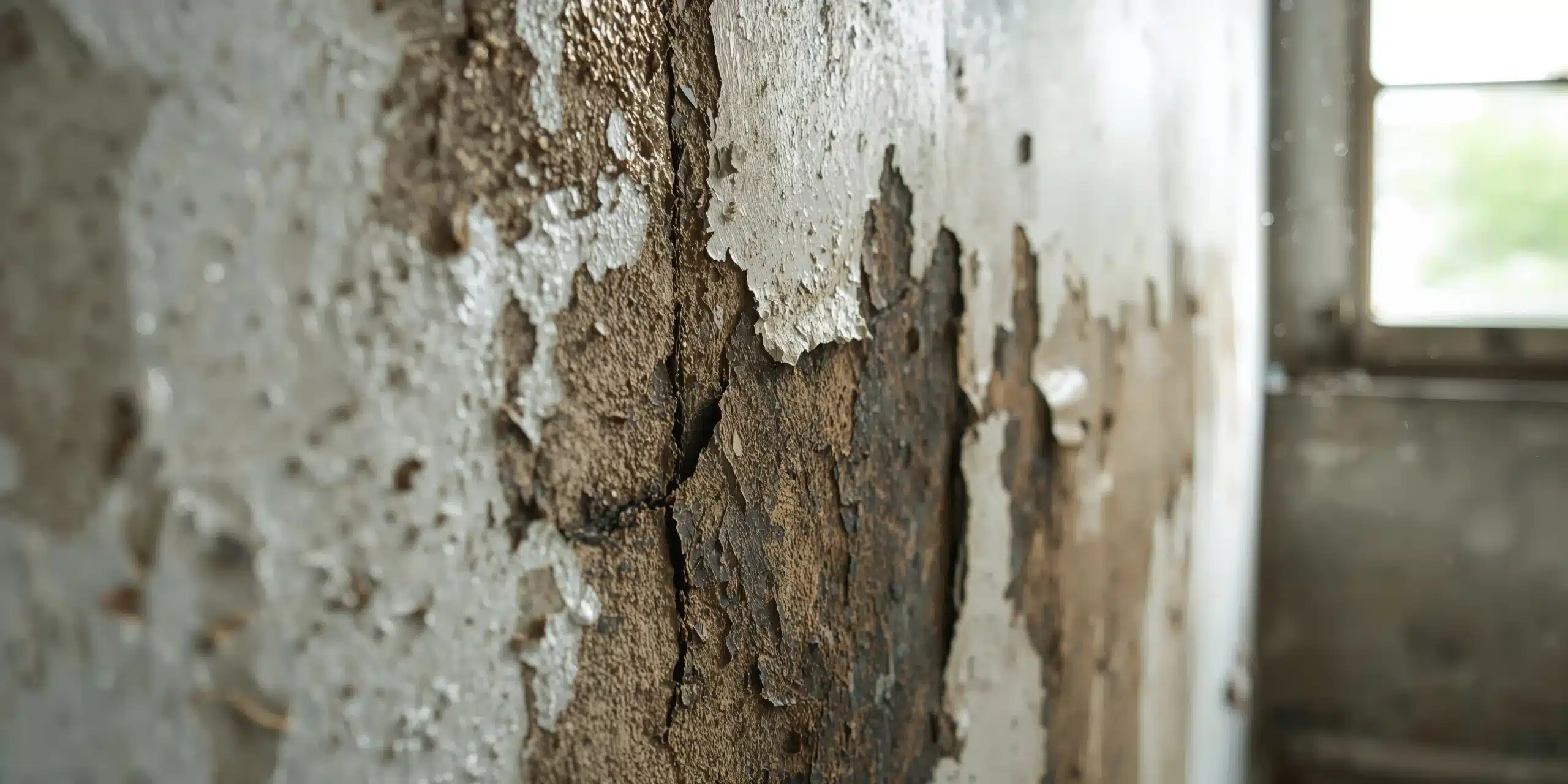
The walls in your home can be damaged when moisture enters through leaks, plumbing issues, roof problems, or cracks in the exterior of the house. When water gradually seeps into drywall or plaster, the material may deteriorate, and mold may develop. Let’s explore how to fix a water-damaged wall when stains, soft spots, or peeling paint appear on the wall. This guide will explain how water damage appears on walls, the signs of water damage, and how you can fix and prevent this problem.
How Does Water Damage Walls?
Wall damage caused by water occurs when moisture enters through roof leaks, broken pipes, clogged gutters, gaps in the exterior siding, or failing grout and waterproofing systems. Water then seeps into the drywall or plaster, which causes damp spots inside the walls and weakens the materials. Moisture damage may also cause stains and peeling paint. Bathrooms and laundry rooms are more likely to experience water damage as these areas are regularly humid and have pipes that run through the walls.
Signs of Water-Damaged Walls
The following signs are indications of water issues in your walls and should not be ignored.
Discoloration or Stains
Stains form when moisture reaches the surface and brings dirt or minerals to the top layer before it evaporates. The marks that are left behind often look yellow or brown.
Bubbling or Peeling Paint
Paint begins to lift when moisture builds up behind the surface. This causes the bond between the wall and the paint to weaken. Small bubbles may form, and the paint will begin to lift or peel away. This is common in bathrooms or areas that tend to be damp regularly.
Efflorescence
Efflorescence appears as a white and powdery layer that is often found on basement walls. It forms when moisture pulls salts out of masonry or cement-based materials and leaves them on the surface as it evaporates.
Cracks
Cracks appear when a wall has stayed damp for a long time. Drywall may absorb moisture and begin to shift, leading to thin lines or wider breaks on the surface.
Musty Smells
A musty smell usually means that moisture has been an issue in your walls for some time. Moisture trapped inside the drywall creates a stale odor that does not go away with regular cleaning. You may notice the smell in small rooms or basements, where airflow is limited.
Mold Growth
Mold appears when walls stay damp, and the surface does not dry properly. Small spots show up first and spread as moisture continues to collect behind the paint or the drywall. Mold can grow on painted walls, plaster, or in areas with humidity or poor ventilation.
Warping or Bulging Walls
A wall starts to warp when moisture collects inside the drywall or plaster. The surface may push forward or curve because the layers behind it have softened. This sign often means the wall has been damp for a long time, and the structure needs attention.
How to Fix Water Damage on Walls
Repairing a wall damaged by water starts with finding the source of moisture and addressing it. Once water is not seeping in anymore, you can move on to restoring or replacing the material.
Identify The Cause
Start by finding out where the moisture is coming from. Look for roof leaks or pipe leaks. There may also be damp spots in bathrooms or kitchens where grout has worn out. A moisture meter helps to pinpoint the wet areas, but you can also check for soft patches or look for darker sections on the surface of damaged walls. Once you identify the source, fix any leaks or replace damaged materials in order to prevent more water from seeping in.
Preparing for Repairs
Preparing a wall for repair starts with cleaning the damaged spot. Loose paint or softened drywall can usually be removed easily. Give yourself space to work by moving furniture away from the wall. The repair may create dust or debris, so cover the floors, furniture, and any permanent fixtures.
Water Removal
Remove any standing water near the wall before you begin drying it. Some homeowners use a wet vacuum for areas where water has pooled at the base of the wall. Others blot the surface with towels if the moisture is light. If the wall feels soaked, placing fans close to the area helps move the damp air out. The goal here is to pull out as much water as possible so that the wall can dry more evenly.
Drying & Cleaning
After the excess water is removed, focus on drying the wall. Set up fans near the surface to move air across the damp area. A dehumidifier helps to pull moisture out of the room if the wall has been wet for a long time. After the wall dries, wipe away dirt or residue from the water. Cleaning helps to keep the surface ready for restoration.
Restoration
After the wall is fully dry, you can start rebuilding the damaged section. Remove weakened drywall and replace it. Joint compound can be used to cover seams; let it dry before sanding the surface. Once the wall feels even, apply primer and repaint. If large sections of the wall have been damaged, you may need to hire a professional water damage remediation company to restore the walls in your home.
Preventing Water Damage
Moisture in the walls generally occurs in a few common places, like bathrooms, kitchens, and laundry rooms. Start with areas that often stay damp, including areas near sinks, toilets, and washing machines or dishwashers. Outside the home, clogged gutters can cause water to overflow and run down the walls of your home or pool around the basement and seep in through the basement walls. Keep an eye on these spots to reduce the chance of hidden damp patches from forming.
Contact OKC Restorations for Professional Help
When walls in your home have clear signs of water damage, it’s a good idea to hire professionals to inspect your walls and provide repair solutions. OKC Restorations handles moisture inspections, drying, and repairs for damaged walls. Reach out to our team if you want an inspection or moisture remediation solutions.
Frequently Asked Questions (FAQs)

HomeAdvisor uses an extensive screening process to screen businesses and business owners/principals.


Contact